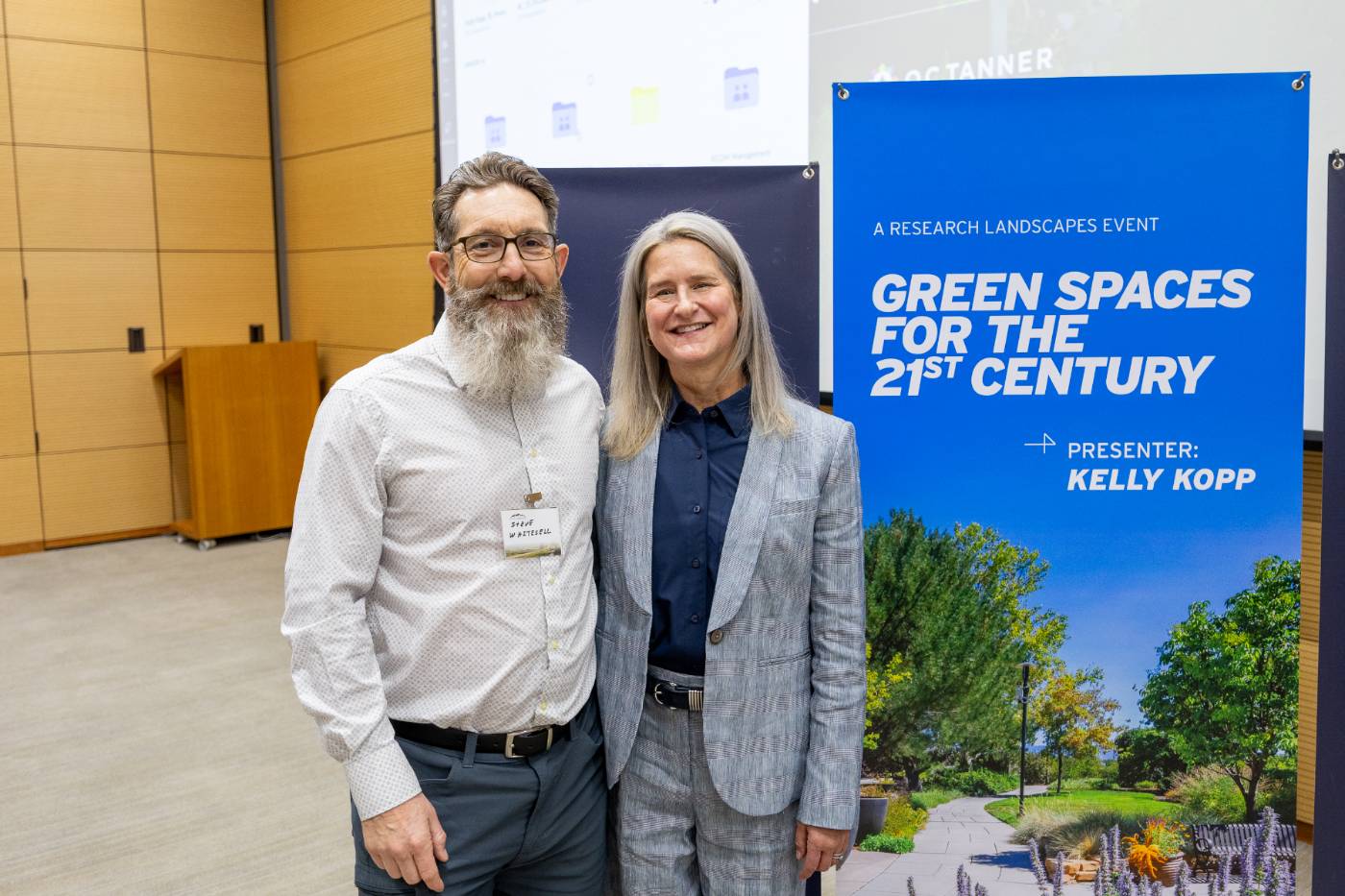
Green Spaces for the 21st Century
As Utah faces continued drought conditions, how can residents reduce the water needs of their green spaces while preserving the benefits those landscapes provide?
This is the question Utah State University’s Kelly Kopp seeks to answer. Kopp directs USU’s Center for Water Efficient Landscaping, which strives to lessen the resource cost of urban green spaces without sacrificing green spaces entirely.
Green infrastructure provides important social, economic, and environmental benefits. For instance, green spaces in dense urban areas help to mitigate the impacts of urban heat islands — the term describing increased heat in urban areas compared to surrounding rural areas.
To research the costs and benefits of different landscaping options, Kopp planted a set of plots with common landscaping options: High and low water “localscapes” — which utilize plants suited for Utah’s climate — high and low water turfgrass, ornamental plants and a thyme lawn. She and her research team then record data on a variety of measures, ranging from the water requirements of the different landscapes to drone footage showing the cooling effects.
Currently, Kopp is two years into the 10-year project. Although results are preliminary, they are beginning to show the tradeoffs of each landscaping option. For example, thyme lawns require little water compared to turfgrass, but they sequester little carbon. Turfgrass is water-intensive but cost- and labor-friendly. Ornamental plants have a higher monetary and labor cost, but they use the least water and sequester the most carbon.
Kopp’s goal is to provide anyone designing an urban green space with the most knowledge about the resource requirements and benefits that various options provide.