
A Simple Sonication Aided Wet Milling Method to Tune Hydrophobic Antioxidant Size for Suitable Bioavailability
Biotech and Life Science
Abstract
Reactive oxygen species (ROS)-induced diseases pose a significant challenge in modern medicine, necessitating innovative therapeutic and preventive strategies. By leveraging hydrophobic nanoparticles (NP), antioxidants can be effectively delivered to lipophilic cellular compartments, such as mitochondrial membranes, where ROS generation is pronounced. A simple sonication-aided wet-milling technique is introduced to generate stable nanosuspensions of hydrophobic antioxidants, free from solvents and surfactants. The NP size can be precisely tuned (80-160 nm), specific for cellular endocytosis. This approach is a promising method for enhancing the solubility, bioavailability, and bioactivity of antioxidants and other therapeutic agents.
Problem
Hydrophobic antioxidants and other agents are poorly absorbed. Since endocytosis occurs only with nanoparticles under 160 nm and of uniform size, larger or inconsistent particles are cleared before becoming bioavailable.
Solution
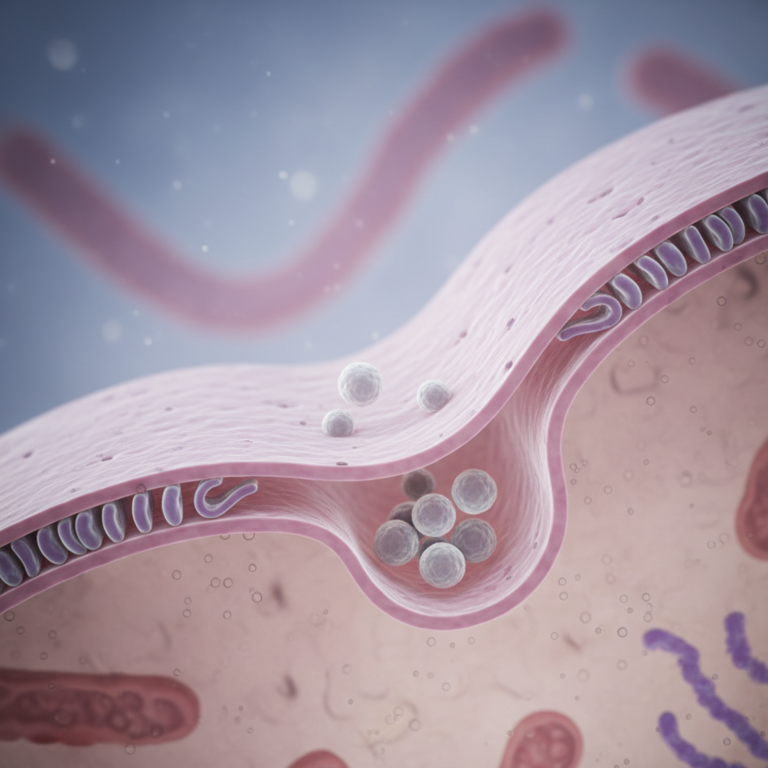
Researchers at USU developed a sonication-aided wet-milling process to precisely tune antioxidant nanoparticles to 80-160 nm, allowing for more frequent endocytosis. This works with all hydrophobic pharmaceuticals.
Value Proposition
Increased rate of endocytosis allows healthcare professionals to decrease prescription dosage, which in turn decreases side effects, costs of medication, and waste, creating a safer, cheaper alternative for treatment.
Benefit
Diseases driven by reactive oxygen species (ROS) remain a major challenge in modern medicine, underscoring the need for novel therapeutic and preventive approaches. While antioxidants show strong potential for mitigating these conditions, many are hydrophobic and thus poorly soluble in the body. Furthermore, since endocytosis is limited to nanoparticles under 160 nm, larger or irregularly sized antioxidant particles are often cleared before achieving meaningful bioavailability.
Researchers at USU developed a sonication-aided wet-milling process to precisely tune antioxidant nanoparticles to 80-160 nm, allowing for more frequent endocytosis. Additionally, this consistent approach produces nanoparticles of uniform size. This works with all hydrophobic pharmaceutical products.
Previously, this problem has been solved by increasing the dosage size of therapeutic substances, which has led to more side effects, increased costs, and an increased likelihood of drug tolerance and resistance. Alternatively, an increased rate of endocytosis allows healthcare professionals to reduce prescription dosages, which in turn reduces side effects, medication costs, and waste, creating a safer, cheaper alternative for treatment.
Market Application
This technology provides an improved method to make therapeutic agents bioavailable, which directly applies to drug manufacturing and healthcare. Pharmaceutical companies and hospitals will greatly benefit from this innovative approach.
I Have an Inquiry About This Technology
Inventors
Kyle Jackson
Graduate Student
USU Department: Biological Engineering
Funding
This invention was made with government support under 80NSSC20M0103 awarded by NASA. The government has certain rights in the invention. (Utah NASA Space Grant Consortium Subaward 10054954-Sojka)
USU Reference No. C26012
- Jackson, K., Britt, D., & Huang, Y. (2025, May 5). A Simple Sonication Method for Generating Monodispersed Nanoparticles of Hydrophobic Antioxidants. Utah Space Grant Consortium. Retrieved from https://digitalcommons.usu.edu/spacegrant/2025/all2025/8/
U.S. Provisional Patent Application Filed November 2025