
How to Succeed in the Office of Research Seed Grant Program
This training, held in a panel setting, drew upon the experiences of USU faculty members who have successfully obtained funding from the Office of Research seed grant program to jump-start their research activities.
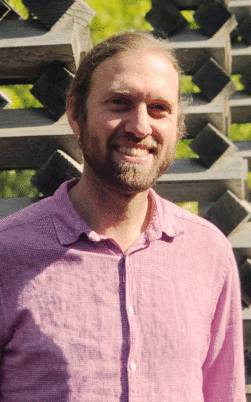
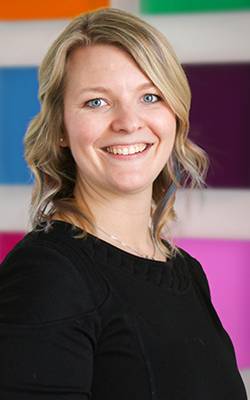
The panelists that participated in the training were:
- John Morrey, Research Professor from Animal, Dairy and Veterinarian Sciences college
- Nancy Sassano, Proposal Development Specialist for the College of Education & Human Services
- Teresa Ukrainetz, Professor & Assistant Department Head & SLP Division Chair
- Soren Brothers, Assistant Professor, Watershed Sciences and Ecology Center
- Breanne Litts, Assistant Professor of Instructional Technology and Learning Sciences




Video and Slides
Did you miss the training? Watch the recorded video and read the PowerPoint slides!
Question & Answer Session
- Can one apply for more than 1 seed grant in a single cycle?
- The Research Development team strongly discourages applicants from submitting more than 1 application at a time during a cycle for 2 reasons:
- One, you cannot be the PI on more than 1 proposal.
- Second, we recommend focusing all your attention on just one research proposal at a time so you don’t get overwhelmed or confused on what project is what.
- The Research Development team strongly discourages applicants from submitting more than 1 application at a time during a cycle for 2 reasons:
- Can you apply for the same type of grant multiple times?
- No, you cannot apply for the same kind of grant in a short amount of time IF you are awarded the seed grant. In order to apply for the exact same type of grant AFTER being awarded, you need to wait 3 years. If you are NOT awarded, you are welcome to re-apply to the same type of grant.
- What budget items do I need to include in my application?
- The F&A will be calculated for you by the system, but otherwise you need to put in effort, salary etc. into your application.
- Who would be a good resource to seek out when writing a proposal?
- Find some support form your fellow employees and those in your college. When you are submitting your application, don’t just argue your point for yourself but have your colleagues in mind that would also benefit from your grant. Your associate dean would also be a good resources to turn to when writing and submitting an application.
- What are some important tips for success when putting your whole application together?
- What is your vision for the external proposal? Most proposals that come
- Write to the appropriate audience.
- Can post doctorates apply for these grants, and/or participate in the selection panel?
- There’s a lot of competition involved in these grants so the more experience you have, the better.
- If you are interested in being on the panel, talk to someone on the panel or your dean that you are interested and this can get your foot in the door.
- Is there any kind of budget that the department needs to stay in or meet per cycle?
- For each fiscal year, we have about $350,000-400,000 to spend; about $200,000 per cycle.
- There is no quota we have to meet or fill. We don’t reject proposals for money reasons; they are rejected because the science was bad, the writing was not directed to the audience, and/or all the questions on the application were not answered.
- What are some criteria that authors can meet to succeed in their grant writing?
- Follow all the instructions on the application paperwork.
- Be clear in writing what the external plan is and how your work will contribute to the larger project in the long run.
- Make it relatable to he PI’s career.
- Communicate the science in a way that a non expert would understand it.
- “Make it a compelling story to read and have good communication” – Blake Tullis
- Just to clarify, are the proposal methods meant to be aligned with the external project?
- It will state it in the instructions for your specific grant application wether or not you will need to apply it to the external project or not.
- When it comes to the GEM grant, what mentor recommendations do you have?
- Find someone who has recently been funded; they will be able to guide you through the process and make your proposal similar to theirs.
- The whole point of a mentor is to help you understand what it necessary to be successful for the funding agency.
Testimonials
"It was good to hear about how other people not in my area deal with safety issues."
"Very good! I’m glad to see that I’m not the only one whose time in lab has decreased with years at USU. It is so difficult to be everywhere. Thanks!"
"Super helpful to get additional insights into preparing a competitive seed grant."
"Great Session, very informative."